
Investment or Malfunction?

Reasons Why Constructing a Building Can Become a Geotechnical Nightmare
The varied topography and geology of Bali create highly interesting engineering challenges, especially amid the massive ongoing tourism infrastructure development. To devise effective mitigation strategies, a comprehensive analysis from geotechnical, environmental, and hydrological perspectives is required. Hilly areas and coastal cliffs are often targeted by investors for resort or villa development due to their aesthetic views. However, slope modifications in these areas trigger a high risk of instability. If slopes are utilised without adequate reinforcements, the safety factor (SF) can drop below critical limits, meaning the slope is highly susceptible to collapse. Seismic factors, considering Bali is in a medium-high risk zone, also introduce additional inertial forces that worsen construction stability.
The Role of Water and Land Use Changes on Slope Stability
Beside steep slopes, water is the main trigger for slope failures in the Bali region. High rainfall will seep into the ground, filling the pore spaces, and drastically increasing pore water pressure. This increase in pressure effectively reduces the effective stress of the soil and decreases the shear strength of the slope-forming material. This condition is exacerbated if there is no good drainage system to channel surface runoff, making the risk of water accumulation in the slip surface very high. The conversion of land from vegetated areas to built-up areas also eliminates the root reinforcement effect that naturally binds the soil. The construction of infrastructure on the cliff edge directly disrupts the existing natural stress balance of the soil.
Threat of Subsidence in the Coastal Area of Denpasar
Unlike the hilly areas, the coastal region of Denpasar does not face the risk of landslides due to its relatively flat surface, but it does face the challenge of land subsidence. Coastal areas such as mangrove and swamp regions are dominated by layers of highly compressible soft soil. Testing shows that the majority of the soil is sandy silt with a silt fraction reaching 62-75%. Its physical parameters indicate very high water saturation, where the water content in the mangrove area can reach 67.36% with a very low dry density of up to 0.483 g/cm³. The thick layer of soft soil up to a depth of 12 meters causes the pore water expulsion process during soil loading (consolidation) to be very slow. This triggers long-term consolidation settlement and differential settlement that can damage the building structure.
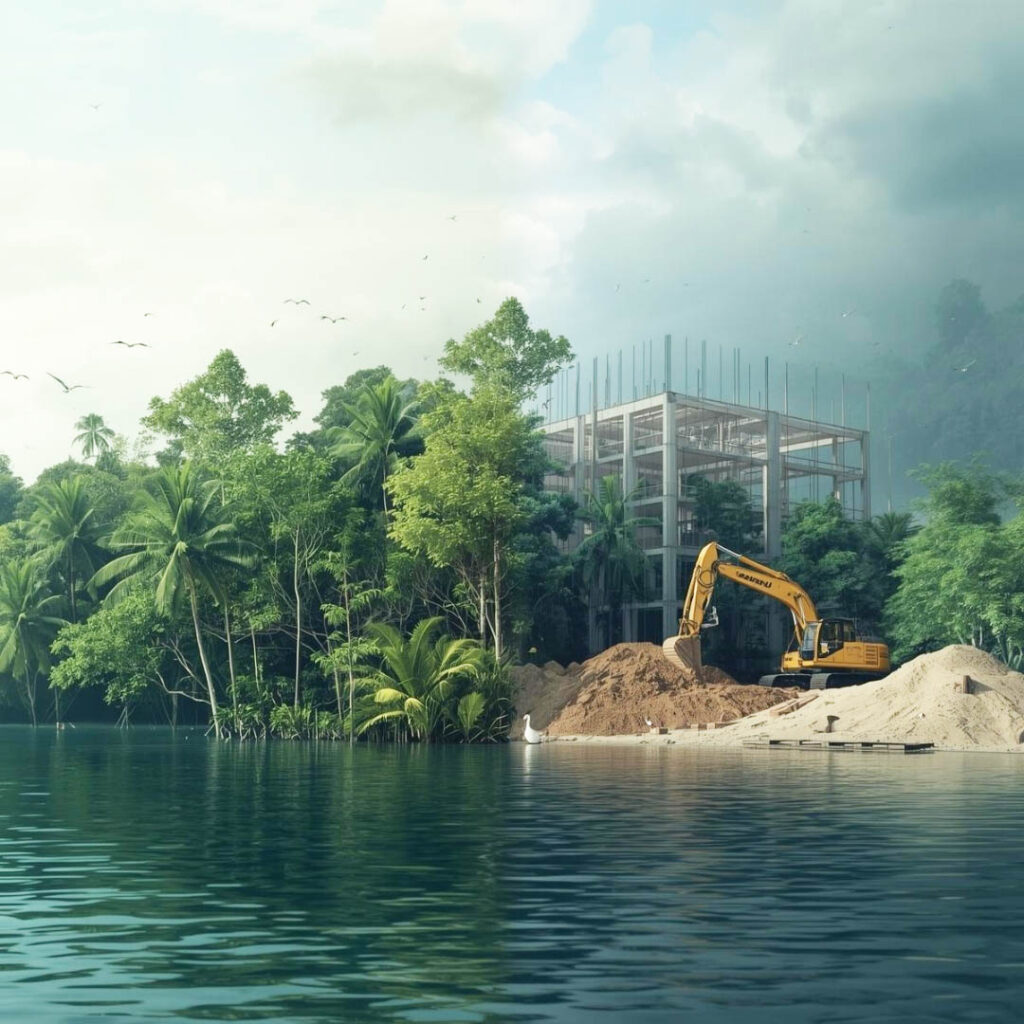
Urbanization and Future Engineering Strategies
Denpasar is currently experiencing tremendous urbanization pressure with the loss of approximately 0.145 km² of agricultural land each year. Massive land conversion for settlements adds structural load to the soft soil layers beneath. Massive groundwater reduction or failure to manage surface drainage can trigger a sudden increase in effective soil stress, accelerating the compaction of the soil matrix and causing severe ground subsidence. In addition, infrastructure such as the Suwung Landfill adds extra load while also raising issues of leachate contamination in shallow groundwater. Therefore, building engineering in Bali heavily relies on proper zoning. In the hilly areas, foundation engineering and retaining walls are key, while in the coastal areas of Denpasar, preloading techniques and soil improvement are very important to consider for construction safety.
Tag:Bali Excellent Campus, Bali Geotechnics, Bali's Best Campus, Best University, Civil Engineering, Cliff Construction, Denpasar Subsidy, Disaster Mitigation, engineering campus in Bali, Excellent Campus, Faculty of Engineering, Faculty of Engineering and Informatics, FTI Undiknas, Impact Campus, Kampus-Milenial-Bali, Millennial Campus, PPI campus in Bali, Slope Stability, Soft Soil, Today's Campus, Tourism Infrastructure, Undiknas Bali Millennial Campus, Undiknas Best University, Undiknas Impactful Campus